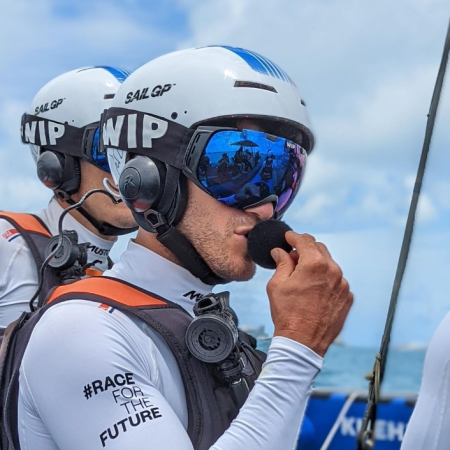
 The landscape of sailing and water sports has shifted dramatically in the last decade. With the advent of hydrofoiling, boats are no longer just plowing through waves; they are flying above them at speeds that were once unimaginable for wind-powered craft. As speeds increase, the elements—wind, water spray, and UV glare—become more aggressive. Standard sunglasses often fail under these conditions, slipping off or fogging up just when visibility is critical. This is where specialized gear becomes essential, and leading the charge in optical protection for sailors is the Forward Wip Jet mask.
The Evolution of Water Impact Protection
Forward WIP (Water Impact Protection) has built a reputation on protecting athletes in high-risk sailing environments, such as the America’s Cup and SailGP. While helmets and impact vests cover the body, the eyes remain a vulnerable target. Salt spray at 30 knots feels like gravel, and the apparent wind generated by high-speed foiling can cause eyes to tear up, blinding a sailor at crucial moments.
The Forward Wip Jet mask was engineered specifically to solve these problems. Unlike standard goggles which can be bulky and limit peripheral vision, or sunglasses which lack security, this mask offers a hybrid solution designed to integrate seamlessly with high-performance helmets.
Design and Helmet Integration
One of the standout features of this piece of kit is its versatility in mounting. While it can be worn with a strap, it is primarily designed to clip directly onto Forward WIP helmets, such as the Wipper or the X-Over. This integration creates a streamlined, aerodynamic profile that reduces drag—a marginal gain that matters in competitive racing.
When attached to the helmet, the Forward Wip Jet mask functions similarly to a motorcycle visor. It can be easily flipped up when rigging the boat or communicating with the team during a lull, and snapped down securely when the action heats up. This “flip-up” capability is a massive advantage over fixed goggles, which often have to be removed entirely and risk getting lost.
Lens Technology and Visibility
In water sports, clarity is safety. The lenses used in the Jet mask are distinct from standard polycarbonate options found in cheap eyewear. They typically feature:
- Hydrophobic Coating: This is perhaps the most critical feature. The coating encourages water to bead up and roll off the surface immediately, ensuring that heavy spray doesn’t distort your view of the course or the waves ahead.
- Ventilation Systems: Fogging is the enemy of any enclosed eyewear. The Jet mask utilizes a specific airflow design that channels wind through the mask to keep the internal temperature regulated, preventing condensation even during high-exertion maneuvers.
- Peripheral Vision: The panoramic curvature of the lens ensures that a sailor’s field of view is not obstructed by the frame, allowing them to spot gusts, competitors, or debris in the water from the corner of their eye.
Durability and Safety
Sailing is a harsh environment. Gear is constantly subjected to salt corrosion, intense UV radiation, and physical impact. The Forward WIP Jet mask is built to withstand these rigors. The lens is rated for impact protection, shielding the eyes not just from water and wind, but from physical dangers like a swinging boom, a whipping line, or a collision with the equipment during a capsize.
Note: Proper maintenance is key to longevity. Always rinse the mask with fresh water after use to prevent salt crystals from scratching the hydrophobic layer.
Conclusion
For the modern sailor, kiteboarder, or windsurfer, vision is the primary sensor for performance. Reacting to a wind shift or a rogue wave requires split-second timing, and you cannot react to what you cannot see. By combining aerodynamic integration, superior lens technology, and rugged durability, the Forward WIP Jet mask has set a new standard for on-water optical gear. Whether you are foiling across a bay or racing skiffs in choppy waters, upgrading your eyewear to a dedicated system like this is an investment in both performance and safety.